Slab-on-Grade Foundations for Homes, Shops, and Commercial Buildings
Slab-on-grade foundations play a major role in modern construction. Builders use them for homes, shops, warehouses, and commercial buildings where efficiency, load distribution, and ground-level access matter more than below-grade space. When designed and installed correctly, slab foundations provide strong structural support with fewer long-term maintenance concerns.
This guide explains how slab-on-grade foundations work, when they make sense, and how they compare to other foundation systems. It also covers design considerations, reinforcement strategies, drainage planning, and cost factors, with a focus on performance in North Idaho conditions. RTB Construction installs slab-on-grade foundations for residential, shop, and commercial projects with careful attention to layout accuracy and long-term performance.
What Is a Slab-on-Grade Foundation?
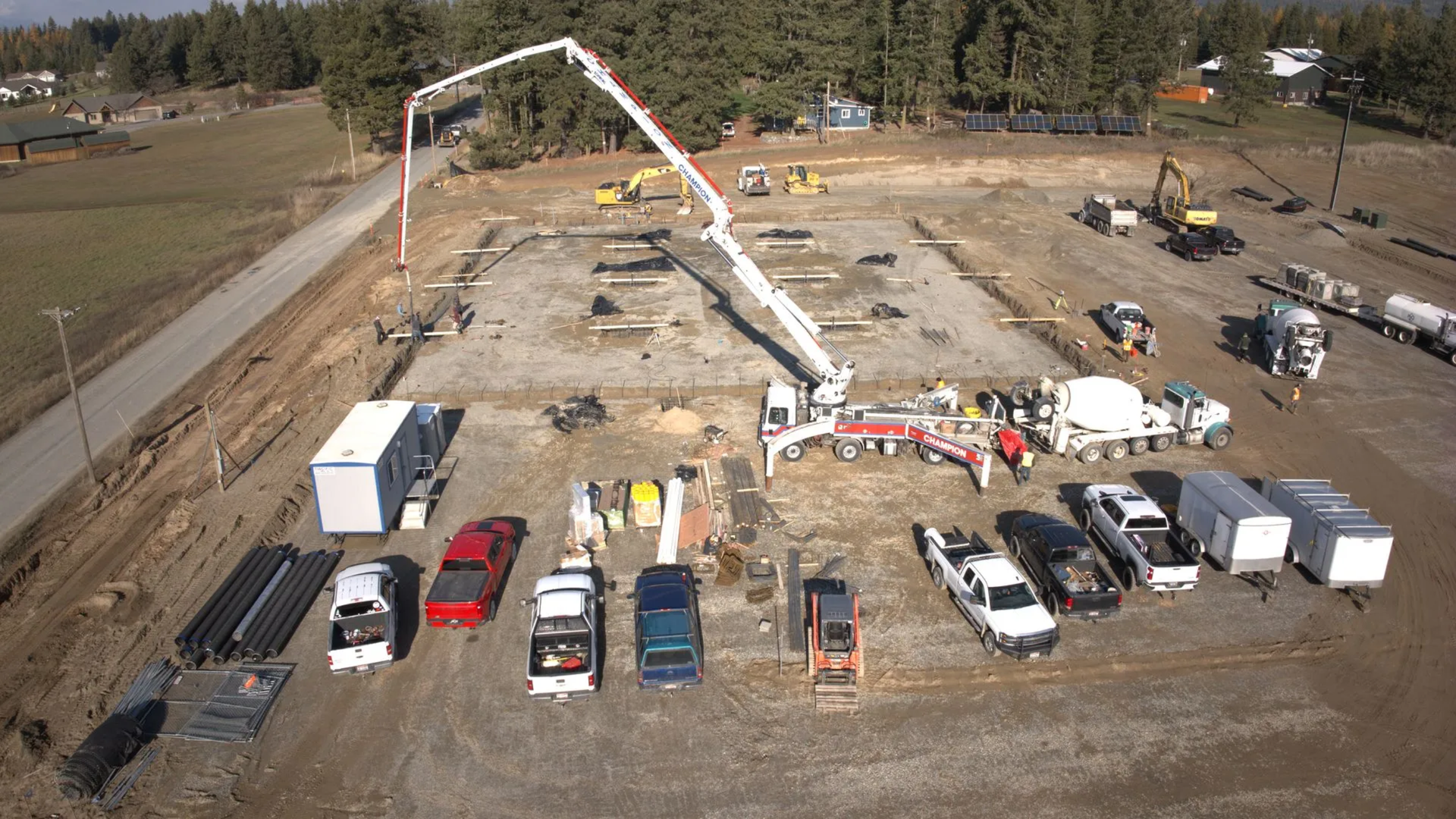
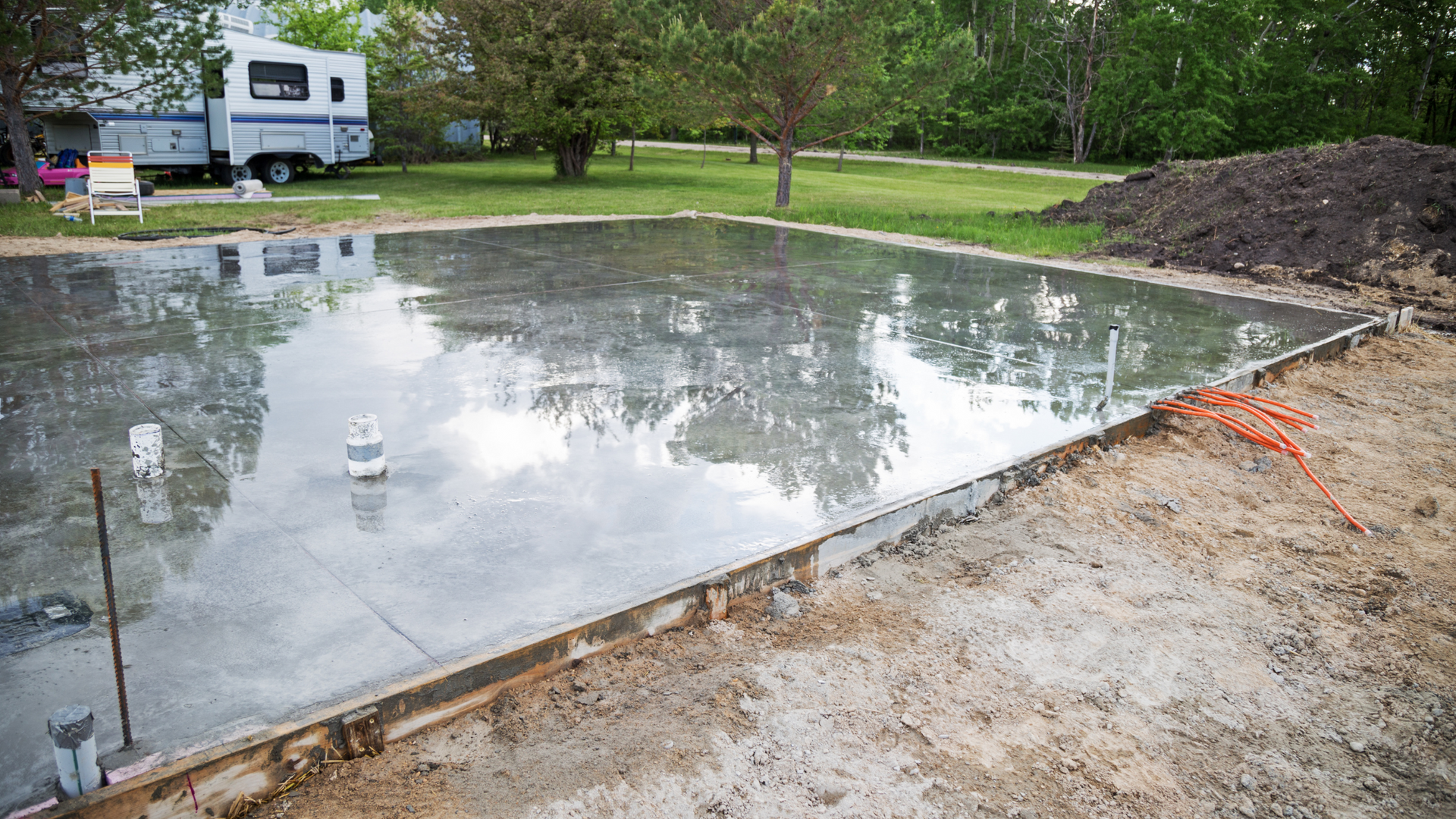
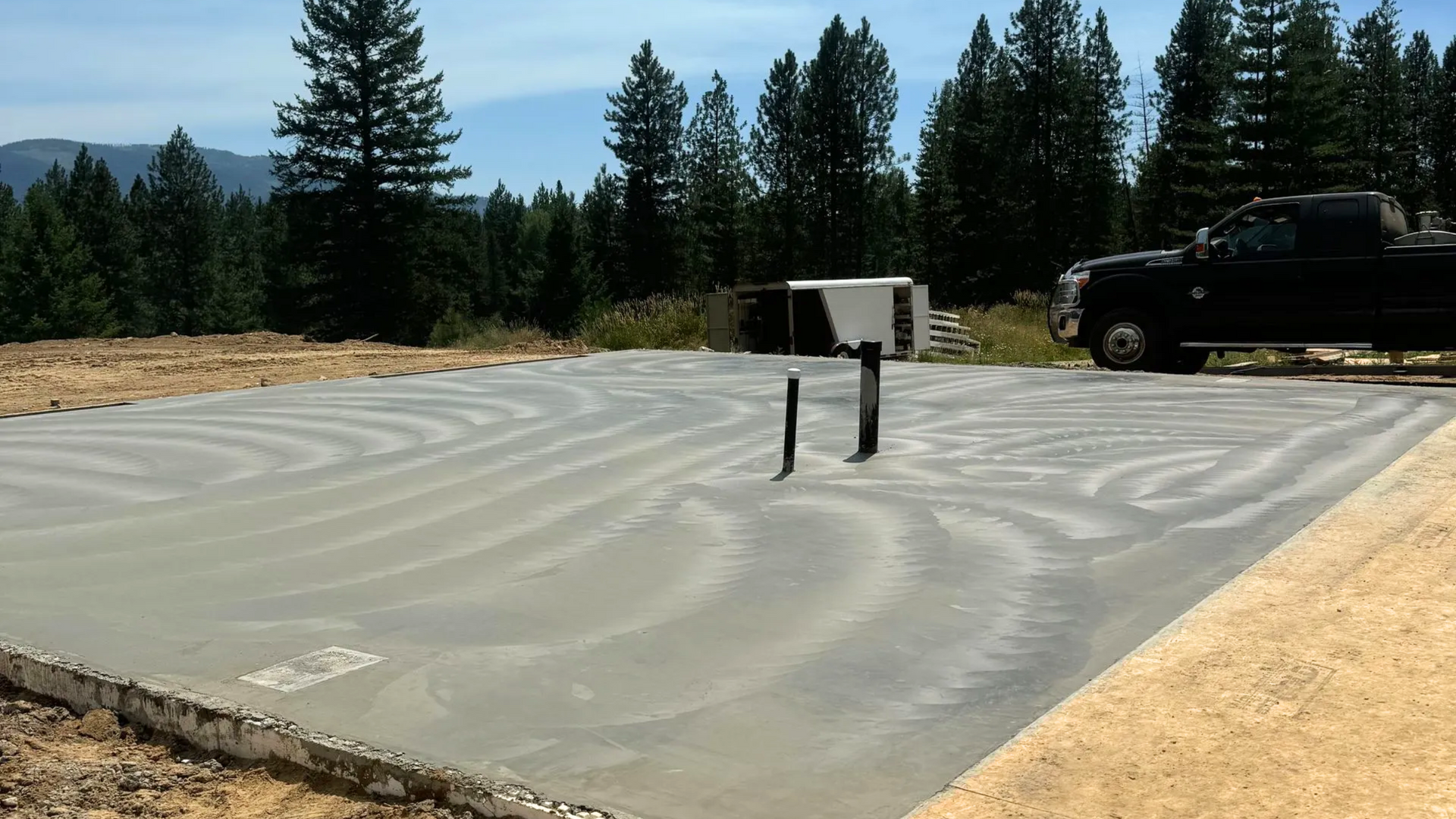
A slab-on-grade foundation consists of a concrete slab poured directly on prepared soil. The slab supports the structure without creating a basement or crawl space below. Builders place the slab on compacted subgrade, often with reinforcement and moisture barriers to improve durability.
A typical slab-on-grade foundation includes:
- Compacted soil or gravel base
- Moisture or vapor barrier
- Reinforcing steel or wire mesh
- Thickened edges or grade beams
- Control joints to manage cracking
Slab foundations rely heavily on proper site preparation. Poor soil compaction or drainage often leads to cracking or settlement.
When Slab-on-Grade Foundations Make Sense
Slab-on-grade foundations work best when a project does not require below-grade space and benefits from ground-level construction.
Builders often choose slab foundations when:
- The building needs open interior layouts
- The site has stable soil conditions
- The budget favors reduced excavation
- Accessibility matters
- Construction timelines are tight
Slabs allow builders to move quickly from excavation to framing when site conditions support this foundation type.
Slab-on-Grade Foundations for Residential Homes
Many homes use slab-on-grade foundations, especially in areas where basements do not provide added value.
Slab foundations work well for homes that:
- Do not require storage below grade
- Prioritize single-level living
- Sit on stable, well-drained soil
- Use radiant floor heating systems
Residential slabs often include thickened edges to support load-bearing walls. Builders may also add insulation beneath or around the slab to improve energy efficiency.
Slab-on-Grade Foundations for Shops and Outbuildings
Shops and outbuildings frequently rely on slab-on-grade foundations due to equipment loads and open floor requirements.
Slab foundations support:
- Vehicle traffic
- Equipment storage
- Heavy tools and machinery
- Flexible interior layouts
Builders often increase slab thickness or reinforcement to handle higher point loads. Proper joint placement also helps prevent cracking caused by temperature changes and use.
Slab-on-Grade Foundations for Commercial Buildings
Commercial buildings commonly use slab-on-grade foundations for efficiency and performance.
These slabs often support:
- Warehouses and distribution centers
- Retail buildings
- Office structures
- Manufacturing and storage facilities
Commercial slabs require careful coordination between layout, reinforcement, and load planning. Builders must align columns, walls, and anchor points precisely to support structural systems.
Slab-on-Grade vs Basement Foundations
Slab-on-grade and basement foundations serve different purposes and suit different project goals.
Slab-on-grade foundations typically:
- Cost less upfront
- Require less excavation
- Reduce construction time
- Eliminate below-grade waterproofing
Basement foundations typically:
- Provide additional usable space
- Support multi-level structures
- Protect mechanical systems
- Increase long-term flexibility
If you want a deeper comparison of design and performance, you can read more about basement foundations for homes, shops, and commercial buildings.
Slab-on-Grade vs Crawl Space Foundations
Crawl space and slab foundations also differ in performance and use.
Slab foundations typically:
- Sit directly on the ground
- Reduce framing complexity
- Improve accessibility
- Limit moisture exposure below the floor
Crawl space foundations typically:
- Elevate the structure
- Allow access to utilities
- Adapt to sloped sites
- Require ventilation and moisture control
You can explore crawl space foundations here to understand how each option performs under different conditions.
Soil Preparation and Compaction
Soil preparation determines how well a slab performs over time. Builders must remove organic material, level the site, and compact the soil properly.
Key preparation steps include:
- Removing unsuitable soil
- Installing compacted gravel base
- Testing compaction levels
- Managing moisture content
Improper preparation often causes uneven settlement, which leads to cracking and structural stress.
Reinforcement Strategies for Slab Foundations
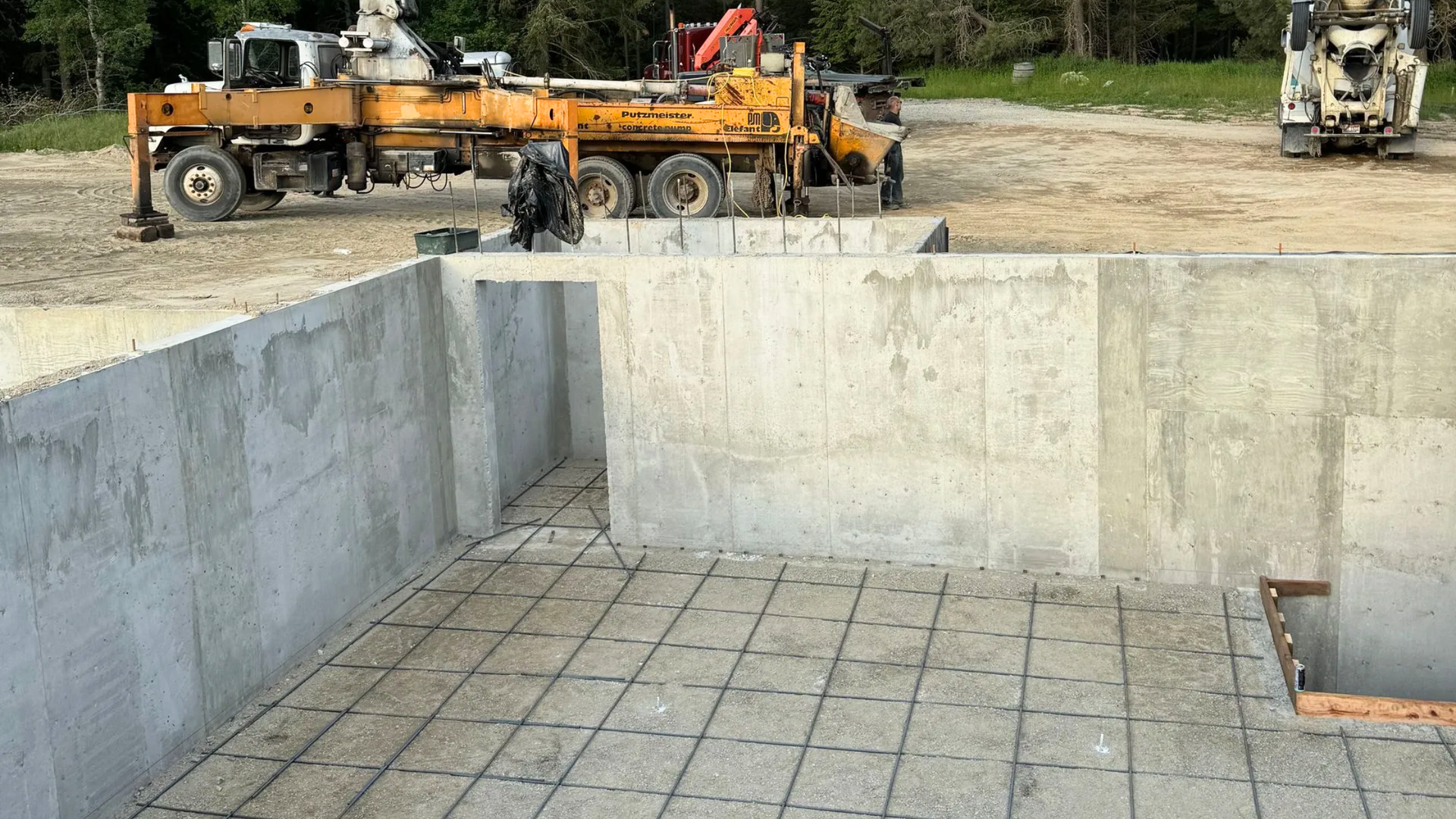
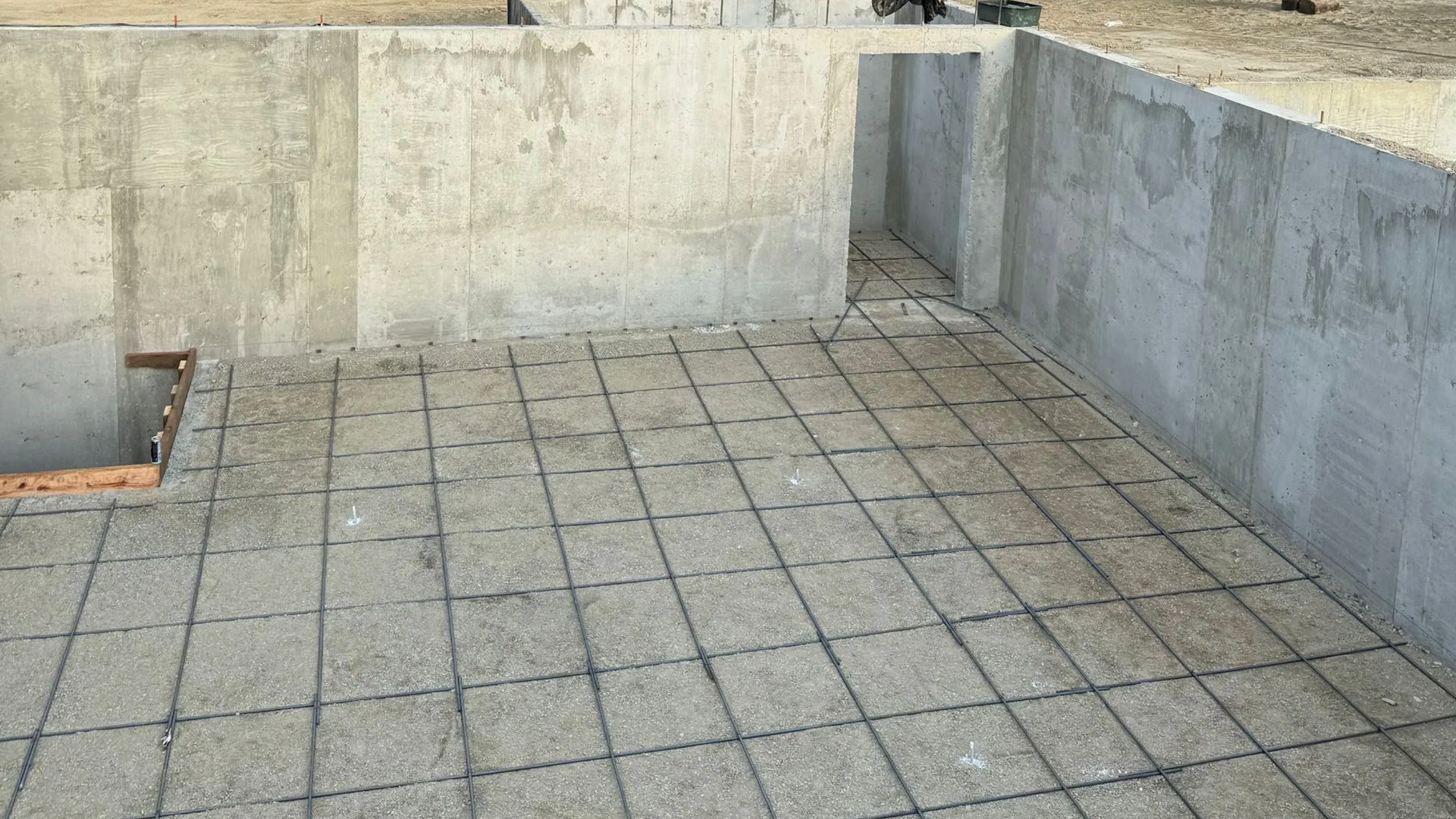
Reinforcement strengthens slabs and controls cracking caused by shrinkage and loading.
Common reinforcement methods include:
- Rebar grids
- Wire mesh
- Fiber reinforcement
- Thickened edges and grade beams
Commercial slabs often use heavier reinforcement due to higher loads. Residential slabs may rely on lighter reinforcement with proper joint spacing.
Drainage and Moisture Control for Slab Foundations
Moisture control plays a critical role in slab longevity. Water trapped beneath a slab often causes movement, cracking, or moisture intrusion.
Effective drainage strategies include:
- Sloped grading away from the slab
- Gravel base layers
- Vapor barriers
- Perimeter drainage systems
Drainage planning becomes even more important in areas with freeze and thaw cycles like North Idaho.
The Role of Layout Accuracy in Slab Foundations
Slab foundations depend heavily on accurate layout. Once concrete is placed, changes become costly and difficult.
Layout accuracy ensures:
- Correct wall placement
- Proper anchor bolt positioning
- Accurate column alignment
- Consistent slab thickness
RTB Construction relies on precise layout methods before any concrete placement begins. You can learn more on this page about foundation layout equipment and how accurate layout supports slab foundation performance.
Control Joints and Crack Management
Concrete naturally shrinks as it cures. Builders use control joints to manage cracking by guiding it into planned locations.
Proper joint planning:
- Reduces random cracking
- Improves slab appearance
- Maintains structural integrity
- Supports long-term durability
Commercial slabs often require engineered joint layouts due to larger surface areas.
Cost Factors for Slab-on-Grade Foundations
Slab-on-grade foundation costs vary based on size, reinforcement, site conditions, and drainage needs.
| Foundation Type | Typical Cost per Sq. Ft. | Common Applications |
|---|---|---|
| Slab-on-Grade Foundation | $10 to $30 | Homes, shops, commercial buildings |
| Crawl Space Foundation | $15 to $40 | Homes, shops, light commercial |
| Basement Foundation | $20 to $75 | Homes, shops, commercial |
These ranges help with early planning. Final costs depend on site-specific conditions and design requirements.
Slab-on-Grade Foundations in North Idaho Conditions
North Idaho presents unique challenges for slab foundations due to climate and soil conditions.
Builders must account for:
- Freeze and thaw cycles
- Frost depth requirements
- Soil drainage capacity
- Seasonal moisture changes
Proper insulation, drainage, and compaction help slabs perform consistently in changing weather.
How Slab Foundations Fit Into Overall Foundation Planning
Slab-on-grade foundations work as part of a broader foundation system that includes layout, reinforcement, and drainage planning.
When these elements align:
- Structural loads distribute evenly
- Cracking stays controlled
- Construction progresses efficiently
- Long-term performance improves
You can review concrete foundation types here to see how slab foundations compare to other foundation systems.
Frequently Asked Questions About Slab-on-Grade Foundations
Do slab foundations crack over time?
- Most slabs develop minor cracking as concrete cures. Proper reinforcement and joint placement help control where cracks occur.
Can slab foundations support heavy equipment?
- Yes. Builders adjust thickness and reinforcement to support heavy loads in shops and commercial buildings.
Are slab foundations energy efficient?
- Slab foundations can improve energy efficiency when builders add insulation beneath or around the slab.
Your Next Step
Slab-on-grade foundations offer a practical and efficient solution for homes, shops, and commercial buildings. When designed correctly, they provide strong support, controlled cracking, and reliable performance with fewer construction steps than deeper foundation systems.
At RTB Construction, we plan and install slab-on-grade foundations with careful attention to soil preparation, layout accuracy, reinforcement, and drainage. If you are considering a slab foundation or comparing foundation options, contact us today. We will help you choose a foundation that supports your project from the ground up.